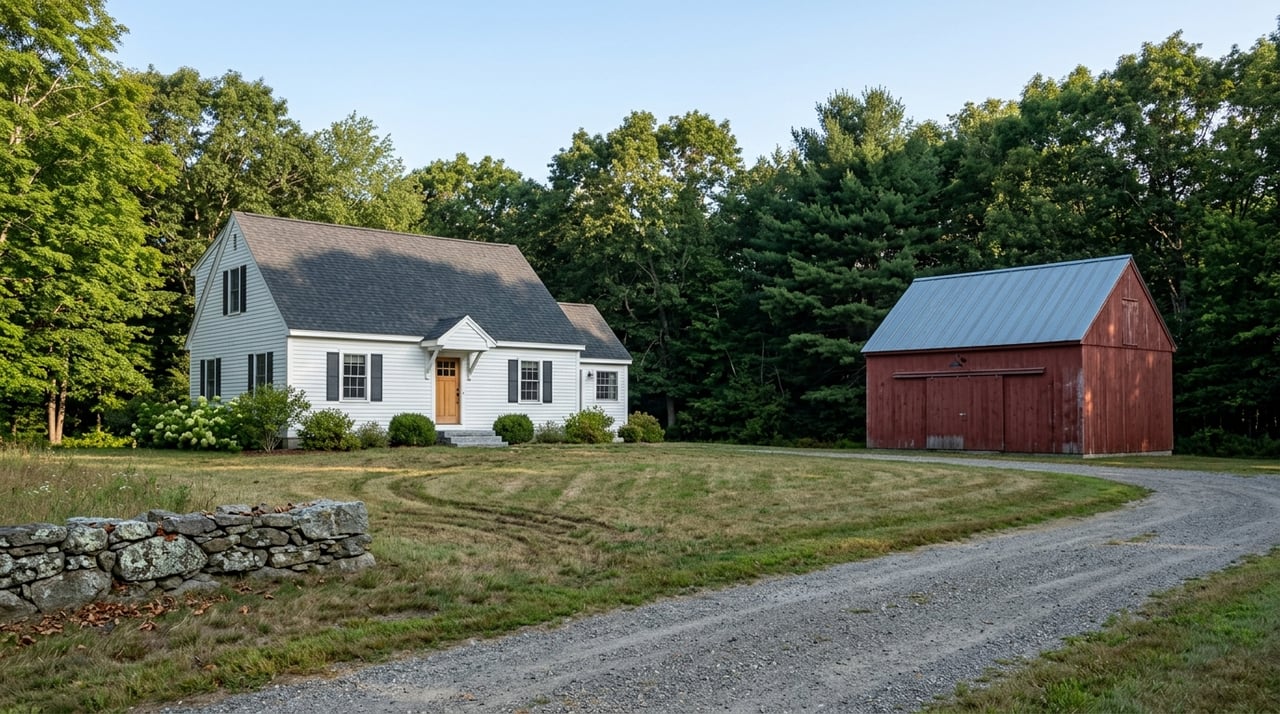
If you are dreaming about a few acres, a garden, a barn, or a small farm setup near Portland, Cumberland deserves a close look. Buying land here can open up real opportunity, but it can also get complicated fast if you do not understand zoning, access, septic, and current-use tax rules before you make an offer. This guide will help you focus on the details that matter most so you can buy with more clarity and fewer surprises. Let’s dive in.
Why Cumberland appeals to land buyers
Cumberland sits about 11 miles northeast of Portland, which gives you a mix that many buyers want. You can still stay connected to the Greater Portland area while looking at property with true rural-use potential.
The town also continues to highlight its agricultural roots. Its farming history and the long-running Cumberland Fair, operated by the local farmers club since 1868, reflect a place where land ownership can mean more than just square footage.
For you as a buyer, that means land in Cumberland may appeal for several different reasons at once. You might be looking for a future homesite, a hobby farm, space for animals, or acreage that offers long-term flexibility.
Start with zoning and overlay maps
Before you think too hard about a barn, fencing, or field layout, confirm exactly what the parcel allows. In Cumberland, that starts with the town’s map library and zoning materials.
The town provides a zoning map, shoreland overlay map, aquifer map, open-space farm and agricultural land map, rural growth map, FEMA maps, and tax maps. These tools help you understand not only the zoning district, but also whether extra review or restrictions could affect how you use the property.
Key lot size rules matter early
Cumberland’s district summary shows that Rural Residential 1 requires a 4-acre minimum lot, or 2 acres with a sewer connection, plus 200 feet of frontage. Rural Residential 2 requires a 2-acre minimum lot with 200 feet of frontage.
That may sound straightforward, but acreage alone does not tell the whole story. A parcel can look attractive on paper and still fall short if frontage, access, or overlay rules limit what you can actually do with it.
Overlay districts can change the picture
If the land falls within the shoreland zone, your review should go deeper. Agricultural activity near water can trigger added standards, including setbacks for manure and planning requirements for larger tillage or manure activities.
The town also limits new livestock grazing areas near water bodies and wetlands in the shoreland zone. So if your vision includes animals, gardens, or expanded farm use, this is something to evaluate before you move forward.
Animal rules for small farms and hobby use
If you are buying land for a small farm lifestyle, Cumberland’s ordinance gives you useful guidance. The rules are clear enough to help you test whether a parcel fits your plans.
Horses are allowed in all districts, with one acre of containment required for the first horse and 10,000 square feet for each additional horse. For other noncommercial animals, at least two acres are required in most districts, but 10 acres are required in VMU, LDR, and MDR.
For smaller-scale use, the town allows up to six hens on a single-family detached dwelling property for personal use only. The ordinance also states that a farm operation complying with applicable state and federal laws is not considered a nuisance.
Farm events and timber harvests may need review
Some buyers want land that can support more than personal use. If you are considering farm-based special events, Cumberland allows them only in certain districts and only after site plan review.
The ordinance caps those events at eight per year, eight hours per event, with a 60-decibel limit at the property boundary and an annual business license. For wooded acreage, commercial timber harvests over three acres also require a permit.
Access and frontage can affect value
One of the biggest mistakes land buyers make is focusing on acreage while overlooking access. In Cumberland, access is part of the buildability analysis, not a minor detail.
The zoning rules note that private streets can satisfy frontage requirements if the plan is surveyed, approved, and recorded. The town’s utility rules also indicate that off-right-of-way utility lines may require special exception approval.
In real terms, two parcels with the same number of acres can have very different value. The one with legal frontage, easier utility access, and fewer approval hurdles may be much more useful than a larger parcel with weaker access.
Water, sewer, septic, and soils
Utilities are another major checkpoint. Cumberland does not have townwide sewer service, and that matters a lot when you are evaluating raw land or rural homesites.
The town says public water is provided by Portland Water District, but service is limited. Sewer lines run along Foreside Road and Tuttle Road to Cumberland Center, while most homes outside those areas use individual septic systems.
Septic feasibility is essential
If a parcel is not served by sewer, septic feasibility becomes a core part of your due diligence. Maine requires a permit to install, expand, or replace a subsurface wastewater disposal system.
That permit application must be prepared by a licensed site evaluator or engineer and must be based on a site evaluation. The system also has to pass inspections.
If the property already has a septic system and is located in the shoreland zone, a certified inspector must complete a septic inspection when ownership transfers. This is one more reason to identify shoreland issues as early as possible.
Soils can shape your options
For land buyers, good soils can support smoother planning and lower uncertainty. Poor soils, difficult topography, or limited septic suitability can reduce what you can build or how much it may cost to develop.
That is why buildability is never just about lot size. You want to know whether the land can support your intended use in a practical, permitted way.
Current-use tax programs may reduce carrying costs
If you are buying larger acreage, Maine’s current-use programs may help reduce annual property taxes. These programs can be valuable, but they come with eligibility rules and potential penalties if the use changes later.
Farmland classification generally requires at least five contiguous acres used for farming and at least $2,000 in annual gross farm income. Open Space has no minimum acreage requirement, but the land must provide a public benefit.
Tree Growth generally requires at least 10 acres of forested land used for commercial harvesting. Applications are filed through the local municipality and are due by April 1 for the year the reduced valuation is first requested.
If your use changes in the future, a penalty may apply. That makes it important to look at tax treatment as part of your larger ownership plan, not just as a short-term savings opportunity.
Financing land and small farms
Financing rural property is often different from financing a typical house in town. If you are buying farmland or a family-size farm property, USDA Farm Service Agency direct and guaranteed farm ownership loans may help eligible borrowers purchase farmland.
The agency also offers a beginning-farmer down payment loan that can partially finance a family-size farm purchase. At the same time, USDA states that it does not offer grants for purchasing land.
That point matters because buyers sometimes assume grants will bridge the gap on a land purchase. In practice, it is smarter to build your financing plan around available loan options, your cash position, and the property’s actual use and eligibility.
Why valuation is different for acreage
Land and small-farm valuation usually takes more work than a typical neighborhood home comparison. With acreage, value may depend on zoning, access, road frontage, utilities, soils, buildability, and permitted use.
Appraisal standards require land to be analyzed first as if vacant and available for its highest and best use. For rural Cumberland property, that can mean a parcel’s real value turns on whether it supports a homesite, animals, farm use, or future timber potential rather than just the number of acres.
This is where local market knowledge and valuation discipline matter. A parcel that looks similar to another listing may deserve a very different price once you account for frontage, septic potential, utility access, or overlay restrictions.
A smart order for due diligence
When you are buying land in Cumberland, the order of your research can save time and protect your budget. The most practical sequence is to review zoning and overlays first, then access and frontage, then water and septic, then current-use tax treatment, and finally valuation and financing.
That order follows the town’s land-use rules, Maine’s septic and tax frameworks, and accepted appraisal practice. It also helps you avoid spending energy on financing or negotiations before confirming whether the property really fits your goals.
What this means for your search
If you want land or a small farm in Cumberland, you are not just buying scenery or acreage. You are buying a set of legal, physical, and financial characteristics that shape what the property can become.
The strongest purchases usually happen when you match your vision to the facts early. That means understanding zoning, confirming buildability, reviewing utility and septic options, and looking at value through a practical local lens.
If you want experienced guidance on Cumberland land, acreage, or small-farm property, The Moulton Group RE brings local brokerage insight together with valuation expertise to help you move forward with confidence.
FAQs
What should you check first when buying land in Cumberland, Maine?
- Start by confirming the parcel’s zoning district and any overlay maps, including shoreland, aquifer, flood, and tax maps, because those rules affect what you can build or do on the property.
How much land do you need for horses in Cumberland?
- Cumberland allows horses in all districts, with one acre of containment for the first horse and 10,000 square feet for each additional horse.
Can you keep chickens on a Cumberland property?
- Yes, Cumberland allows up to six hens for personal use on a single-family detached dwelling property.
Does every Cumberland land parcel have sewer access?
- No, sewer service is limited, with lines running along Foreside Road and Tuttle Road to Cumberland Center, and many properties outside those areas rely on individual septic systems.
Do you need a septic inspection when buying property in Cumberland’s shoreland zone?
- Yes, if a property with a septic system is in the shoreland zone and ownership is transferring, a certified inspector must complete the inspection.
Can Maine current-use tax programs help with Cumberland acreage?
- Yes, depending on the property and use, Farmland, Open Space, or Tree Growth programs may reduce carrying costs, but each program has eligibility rules and a later change in use can trigger a penalty.
Are grants available to buy farmland in Maine?
- USDA says it does not offer grants for purchasing land, so land buyers should not count on grants to close a purchase.
Why is valuing land in Cumberland more complicated than valuing a house lot?
- Land value can depend on zoning, frontage, access, utility availability, soils, and permitted use, so two parcels with similar acreage may have very different market value.