Thinking about buying a duplex, triplex, or fourplex in Portland? You are looking in one of the most relevant small multi-family markets in southern Maine, but it is also a market where older buildings, local rules, and lender expectations can shape your results fast. If you want to understand where to start, what to verify, and how to think about financing and cash flow, this guide will help you move forward with more confidence. Let’s dive in.
Why Portland stands out
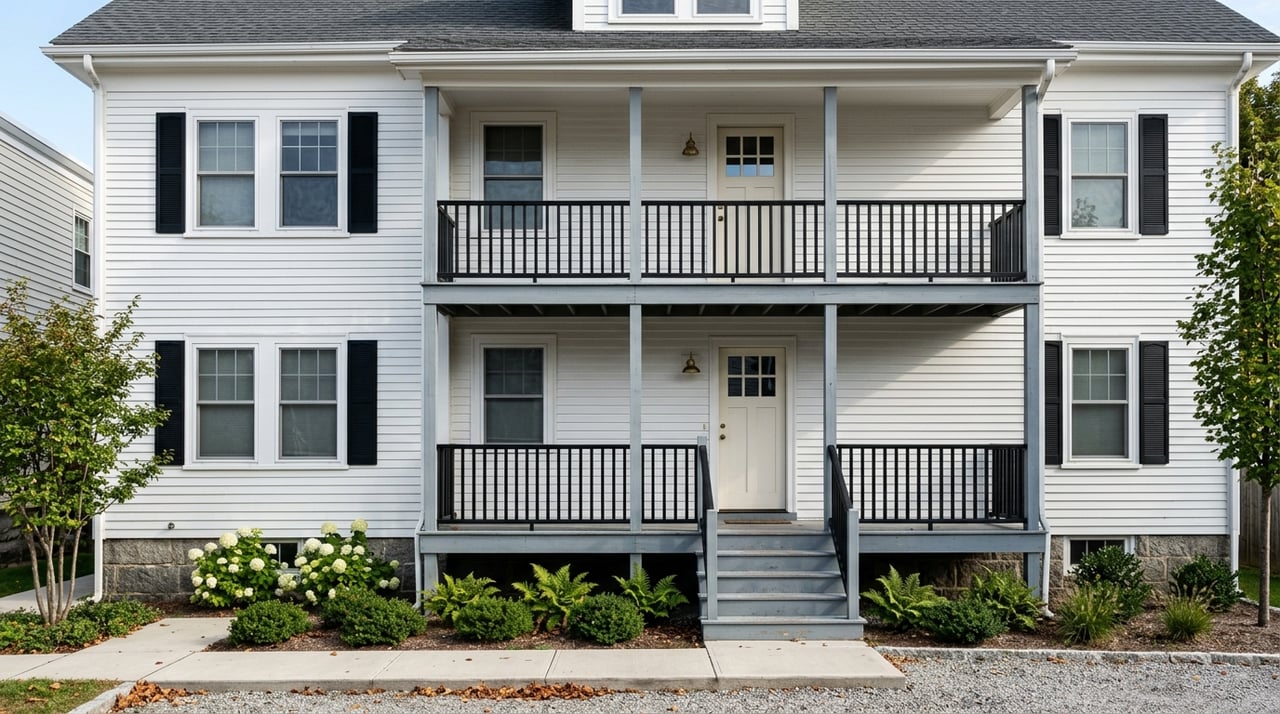
Portland is a strong place to start if you are looking for a small multi-family property because the city already has a large base of this housing type. The city has 34,812 total housing units, including 3,399 two-unit buildings and 5,303 three-or-four-unit buildings. That means about 25% of Portland’s housing stock falls into the small multi-family category.
That matters because inventory type shapes your search. In a market with more duplexes, triplexes, and fourplexes, you have a better chance of finding properties that match an entry-level investing plan. It also means local buyers, sellers, appraisers, and lenders are more accustomed to evaluating these buildings.
Portland is also an older housing market. Nearly half of the city’s housing units were built in 1939 or earlier, which means you should expect older systems, possible deferred maintenance, and more variation from building to building than you might see in newer suburban housing stock.
On top of that, Portland has a rental-registration system, a Rent Board, and multiple residential zoning districts. For you as a buyer, that means the opportunity is real, but so is the need for careful due diligence before you close.
What first-time investors should know
If you are buying your first small multi-family property, it helps to think of it as both a home and an income-producing asset. That is especially true if you plan to live in one unit and rent the others. Your decision should not rest only on curb appeal or square footage.
You also need to evaluate how the building performs. That includes current or market rents, likely repair needs, monthly expenses, and whether the property fits your financing plan. A good-looking building can still be a weak investment if the numbers or condition do not support your goals.
Maine law also makes small-scale housing part of the larger policy conversation. State statute requires municipalities to allow up to two dwelling units per lot in residential areas, and up to four dwelling units in certain growth-area or centrally serviced situations. That does not override local review, but it does help explain why small multi-family and gentle infill remain important topics across Maine.
How lenders view 2-to-4-unit properties
A duplex or fourplex is not underwritten the same way as a typical single-family home. Lenders usually treat two- to four-unit buildings as small residential income properties. That means the financing process often includes more focus on rents, comparable rental data, and the building’s income potential.
Standard appraisal forms reflect that difference. Fannie Mae Form 1025 and Freddie Mac Form 72 are used for two- to four-unit properties, which signals a dedicated appraisal process for this property type. In plain terms, the building is being reviewed not only as shelter, but also as collateral supported by income.
Why the appraisal process matters
For small multi-family properties, appraisers are not only checking size and condition. Fannie Mae guidance says the income approach is required for two- to four-unit properties, and the appraisal form calls for comparable rental data, market rent for each unit, and comments on neighborhood conformity and whether rent control applies.
If a property is not currently rented, the appraiser may still provide a market-rent opinion. That can be useful when you are considering a vacant building or one with below-market rents. It also means your deal should be grounded in realistic income assumptions, not best-case guesses.
Owner-occupied financing can be a major advantage
If you plan to live in one unit, your financing options may be more favorable than if you are buying strictly as an investor. Fannie Mae materials show a 95% maximum loan-to-value ratio for eligible owner-occupied two- to four-unit properties, and Freddie Mac materials also show 95% maximum loan-to-value for eligible owner-occupied primary residences.
By contrast, Freddie Mac guidance shows a 75% maximum loan-to-value for two- to four-unit investment properties. The practical takeaway is simple: if you are willing to owner-occupy, you may be able to buy with materially better leverage.
Rental income is part of the file
Lenders want to know what the property can actually earn. Fannie Mae says rental income can be supported by current leases, and if the property is not rented, the lender may use the appraiser’s market-rent opinion. Freddie Mac also has delivery guidance for rental income on subject two- to four-unit properties.
That is why clear leases, unit layouts, and credible rent estimates matter early in the process. If the rents are unsupported or inconsistent, your financing may become harder to approve or less favorable than expected.
Cash reserves matter more than many buyers expect
Your down payment is not the whole story. Freddie Mac reserve guidance includes six months for a subject two- to four-unit primary residence in certain cases. That means you may need meaningful cash beyond your down payment and closing costs.
In Portland, that cash cushion matters even more because of the age of the housing stock. Older buildings are more likely to bring repair surprises, and having reserves can help you avoid turning a good purchase into a stressful one.
How to underwrite the property simply
A first pass at underwriting does not need to be complicated, but it does need to be honest. Start with gross scheduled rent, then subtract vacancy, repairs and maintenance, capital expenditures, taxes, insurance, and any utilities paid by the owner.
This is where many first-time buyers get into trouble. It is easy to overestimate rent and underestimate expenses, especially when a seller presents a strong story. A more conservative approach usually gives you a clearer picture of whether the property works.
A practical checklist for your numbers
Before you make an offer, review these core items:
- Current leases, if any
- Market rent for each unit
- Vacancy assumption
- Repair and maintenance budget
- Capital improvement needs
- Property taxes
- Insurance costs
- Utilities paid by the owner
- Cash reserves after closing
If the property only works when every assumption is optimistic, it may not be the right first investment. A stronger deal usually still makes sense when you use realistic rents and a healthy repair budget.
Why older Portland buildings need closer review
Portland’s housing stock is one of the reasons the city is attractive for small multi-family investing, but it is also one of the main reasons due diligence matters. With nearly half of housing units built in 1939 or earlier, you should expect many buildings to need updates over time.
That does not mean older properties are bad investments. It means you should go in with your eyes open. Roofs, heating systems, electrical work, insulation, and layout issues can all affect your budget, your financing, and your timeline.
For a first-time buyer, this is where valuation discipline matters. You want to know not just what a property looks like today, but what condition issues or upgrades may affect its performance after you close.
Portland rules to verify before closing
Portland’s operating environment is part of the investment equation. The city has an active rental-registration system and a Rent Board, so buyers of long-term rentals should verify current registration and compliance obligations before closing.
You should also confirm the property’s zoning district. Portland’s zoning map includes multiple residential districts, from R-1 through R-6, and the zoning context can shape how a property is used or evaluated. Even when state law supports small-scale housing, local zoning review still matters.
Your pre-offer due diligence list
Before making an offer on a Portland small multi-family property, make sure you verify:
- The zoning district
- Whether the property is subject to rental-registration requirements
- Whether rent-control rules apply
- The lender program being used for the property type
- Existing leases and rent documentation
- Major repair or system-update needs
These steps can help you avoid surprises that affect value, financing, or future operations.
How Portland compares with nearby options
If you are open to areas outside Portland, it helps to understand how the nearby markets differ. Portland has the deepest concentration of two- to four-unit stock among the places reviewed, which makes it the most established hunting ground for duplexes, triplexes, and fourplexes.
South Portland is a meaningful secondary market. Housing data show 1,248 two-unit buildings and 941 three-or-four-unit buildings, or about 17.6% of total housing units. That is a smaller share than Portland, but still notable for buyers who want to stay close to the city.
Westbrook has a smaller small multi-family share, but it remains relevant. Point2Homes reports 687 three-or-four-unit buildings, or 7.2% of housing units, and local planning materials support a range of unit types, especially in and near downtown.
Scarborough is more suburban and more constrained. Its housing profile shows 4.4% of units in three-or-four-unit structures, and local rules for accessory dwelling units include owner-occupancy requirements and one ADU per principal structure. The town’s rate-of-growth framework also shows a more measured development approach.
Falmouth is more detached-home oriented. The town’s 2024 comprehensive plan says more than 80% of housing units are single-family detached, only 8.6% are in multi-family structures of three or more units, and only 14.2% of housing units are rentals.
For a first-time investor focused on 2- to 4-unit opportunities, the pattern is fairly clear. Portland is usually the strongest starting point, South Portland and Westbrook can be solid alternatives, and Scarborough and Falmouth are generally scarcer small multi-family markets.
A smart way to start your search
If you are just getting started, focus on properties that are easy to understand. A straightforward duplex or triplex with clear unit layouts, supportable rents, and manageable repair needs is often a better first step than a more complex building with unclear numbers.
It also helps to decide early whether you want to owner-occupy. That single choice can shape your financing, down payment, and monthly risk in a major way. For many first-time buyers, living in one unit creates a more accessible path into multi-family ownership.
Most of all, take time to line up the right guidance. In a market like Portland, where property condition, rental income, and valuation all matter, local insight can make your next step much clearer.
If you are exploring a duplex, triplex, or fourplex in Portland or the surrounding Greater Portland market, The Moulton Group RE can help you evaluate opportunities with practical local insight and valuation-focused guidance.
FAQs
What makes Portland a good market for small multi-family investing?
- Portland has a large concentration of two- to four-unit housing, with about 25% of all housing units in that category, making it one of the strongest local markets for this property type.
What should a first-time buyer check before offering on a Portland duplex or fourplex?
- You should confirm zoning, rental-registration status, possible rent-control applicability, lender program requirements, current leases, and likely repair needs before making an offer.
Can you use rental income to qualify for a Portland small multi-family loan?
- Often yes, but the income usually needs to be supported by leases or by an appraiser’s market-rent opinion if the units are vacant.
Is owner-occupying a Portland multi-family property easier to finance?
- It can be, because eligible owner-occupied two- to four-unit financing may allow much higher loan-to-value ratios than financing for a pure investment property.
Why do older Portland multi-family properties need more caution?
- Nearly half of Portland’s housing units were built in 1939 or earlier, so buyers should expect more potential for deferred maintenance and system updates.
Are nearby towns as strong as Portland for small multi-family investing?
- Usually not at the same scale, though South Portland and Westbrook can be reasonable alternatives, while Scarborough and Falmouth tend to have less small multi-family inventory.